
Category: Mindset

  • Should You Give or Lend Money to Family for a Business?

    Should You Give or Lend Money to Family for a Business?

    When a family member wants to start a business, sooner or later the money question comes up. Should you help? And if you do, is it a gift, a loan, or an investment?

    When my mother started her home bakery, I paid for the start from my side income. It was a gift. I never asked for anything back, and I never wanted to. I just wanted to do it for her. The bakery is still running today.

    That worked for us. But every family is different, so in this article I go through the three options and how to choose. For the full story, read how I helped my mother start a home bakery.

    Option 1: Give the money as a gift

    This is what I did. You give the money, and you expect nothing back.

    Why it can be the best choice:

    • No tension. There is no debt between you, so no awkward conversations if a month is slow.
    • Full freedom for them. They can run the business their way.
    • It stays simple. No contracts, no tracking, no repayment plans.

    When it makes sense:

    • you can truly afford to lose the money
    • you want to help, not to earn from it
    • the relationship matters more to you than the return

    For me, it was simple. I had saved money from my side jobs, I could afford it, and I wanted to support my mother. That clarity made it easy.

    Option 2: Lend the money

    A loan means the money comes back over time.

    Good sides:

    • you get your money back if things go well
    • it can feel fair to both sides
    • it can motivate the business to become profitable

    Risks:

    • if the business struggles, repayment becomes a source of stress
    • unclear terms can damage the relationship
    • you may feel uncomfortable asking for money from family

    If you choose a loan, write it down: the amount, how and when it is paid back, and what happens if a payment is late. Even within family. Especially within family.

    Option 3: Invest for a share

    You give money in exchange for a part of the business or its profits.

    This can work when:

    • the business is meant to grow seriously
    • you want to be involved in decisions
    • both sides want a formal arrangement

    Be careful: a share means you are business partners. Disagreements about the business can become disagreements in the family. Only choose this if both of you are comfortable with that.

    How to decide

    Ask yourself these questions honestly:

    1. Can I afford to lose this money completely? If not, do not give it as a gift, and think twice about a loan.
    2. Do I want something back, or do I just want to help? Be honest. Unspoken expectations cause the most problems.
    3. How would I feel if the business failed? If you would feel resentment, a gift is not right for you.
    4. How does the other person feel about it? Some people prefer a loan so they do not feel like they owe you.

    Money is not the only way to help

    In our case, the money was only part of it. I also bought the ingredients at the start and did the marketing, the photo shoots, the posts and the paid ads, because I already had that experience. And I still help with deliveries, especially for parties where a lot is ordered and everything has to arrive before a certain time. With the back seats of my car folded down, there is room for a lot of trays. I explain the marketing in how to market a home bakery on Instagram and Facebook.

    Skills can be worth as much as cash. If you cannot or do not want to give money, offering your time and skills is a powerful alternative.

    What I would tell anyone in my position

    If you are thinking about helping a parent or family member start something, this is my honest advice:

    • Decide before you give. Gift, loan or share. Decide it before any money moves, not afterwards.
    • Say it out loud. If it is a gift, tell them clearly. It removes guilt on their side.
    • Help with the start, not forever. The goal is a business that stands on its own. In our case, once the bakery was running, it paid for itself, including the bigger oven and later a second one.
    • Stay involved where you are useful. For me that is the marketing and the deliveries, not the baking.

    Only give from savings, never from debt

    Whatever you choose, use money you have actually saved. Never borrow to fund someone else’s business. I could help my mother because I had money left over from my side jobs and a simple lifestyle. That is the quiet power of saving: it gives you room to help when it matters. I wrote about that habit in frugal living without feeling poor.

    Build room to help

    A higher savings rate gives you the freedom to support family without risk. Check yours with the free savings rate calculator, and track your money with the free budget templates.

    Frequently asked questions

    Is it better to give or lend money to family?

    If you can afford it and want nothing back, a gift is often the simplest and causes the least tension. If you need the money back, make it a written loan.

    How do you lend money to family without ruining the relationship?

    Put the terms in writing: the amount, repayment schedule and what happens if a payment is missed. Talk about it openly before any money changes hands.

    Should I invest in a family member’s business?

    Only with money you can afford to lose. Be clear whether it is a gift, a loan or a share, and agree on it upfront.

    Can I help a family business without giving money?

    Yes. Skills like marketing, social media, bookkeeping or deliveries can save a small business a lot of money.

  • Door-to-Door Sales Tips That Actually Work (Start With a Compliment)

    Door-to-Door Sales Tips That Actually Work (Start With a Compliment)

    I learned to sell by walking in. Door to door, business to business, with a flyer in my hand and no appointment. Over a few years I sold my own services and, later, the services of other local companies on commission.

    The single habit that made the biggest difference was not a closing technique. It was what I did before the pitch even started.

    People don’t buy from strangers

    When you walk into a shop or knock on a door, the person in front of you has one question in their head: who is this and what do they want from me? Until that question is answered in a friendly way, they are not listening to your offer. They are waiting for you to leave.

    Most beginners try to solve this by talking faster and explaining more. That makes it worse. The fix is the opposite: slow down and make a human connection first.

    The compliment that opens the door

    Before I started any sales pitch, I looked for something personal or something in their business that I genuinely liked. Then I said it.

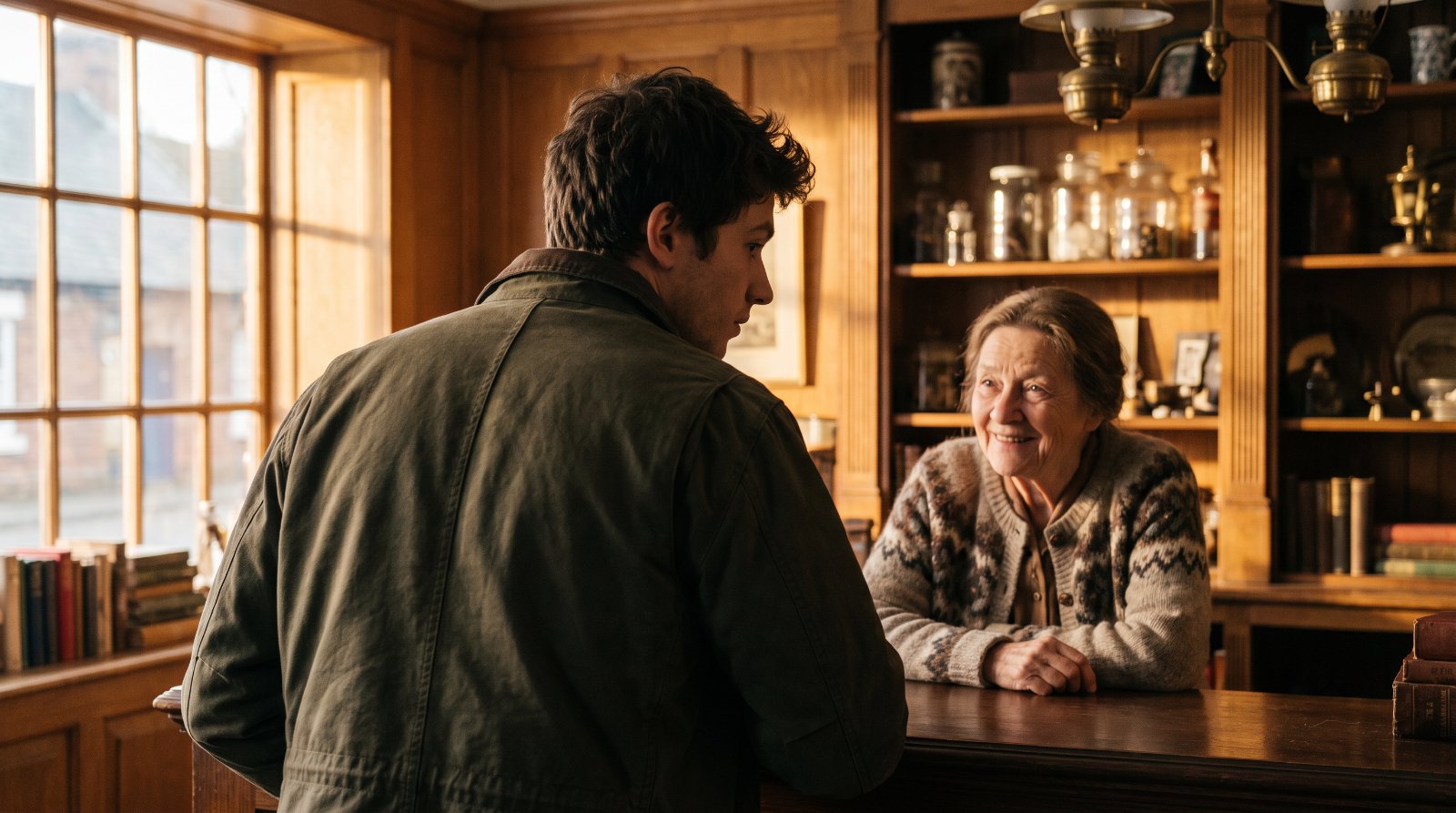
    For example, if I walked into a shop finished in dark wood, with a classic, warm look, I would say to the owner: “I really like how you’ve done this place. The wood gives it a classic feel.”

    That is not a trick. It only works if it’s true, and it’s almost always possible to find something true. A clean workshop. A nice sign. A well-arranged shelf. A friendly dog behind the counter. Owners put a lot of themselves into their business, and almost nobody notices.

    What happens next is simple: we start talking about the shop, about how long they’ve had it, about the wood. Only after that do I explain why I came. By then, there’s already a small bond.

    Why it works

    There are three reasons this habit was so effective:

    1. It changes the role you’re in. You’re no longer “a salesperson”. You’re a person who noticed something about them.
    2. It makes people feel good. And people remember how you made them feel much longer than what you said.
    3. It gives you information. The short conversation tells you what they care about, which tells you how to frame your offer.

    Over time I noticed that people really did remember me. Not my flyer, not my prices. Me, and the moment they had with me. That memory is what brought some of them back months later.

    More tips that worked for me

    The compliment is the opening. Here’s what I learned about the rest of the conversation:

    Learn the craft, don’t just wing it

    I read and watched a lot about sales tactics online, then tested what fit my personality. You don’t need to become a different person. You need a few principles that you practice until they feel natural.

    Keep the pitch short

    After the connection, explain your offer in a few sentences: what it is, why it’s good for them, what it costs. If they’re interested, they’ll ask questions. Questions are a good sign.

    Lead with their benefit

    Not “this company is great” but “you’ll pay less and you won’t have to think about it”. People care about their own problem, not your product.

    Leave something behind

    A flyer or card with a phone number. Many people won’t decide on the spot, but they keep the card. Some of my customers called weeks later.

    Don’t push after a no

    A friendly no today can be a yes in three months, if you leave on good terms. Thank them and move on. You’ll probably pass by again.

    Talk about what else you do

    While chatting, I sometimes mentioned my own services as well. Some people weren’t interested in the main offer but needed something else I could help with. I wrote more about that in how one customer can pay you twice.

    What rejection really means

    You will hear no much more often than yes. That’s not a sign you’re bad at it. It’s the nature of in-person sales. Most people simply don’t need the service right now.

    What helped me was thinking in numbers instead of in single conversations. If one in ten conversations leads to a customer, then every no brings you closer to the next yes. And because I combined sales stops with routes I was already driving, a no didn’t cost me much. I describe that system in how to build a local network on your daily route.

    Sales is a skill you keep forever

    The best part of learning to sell in person is that it’s never wasted. It helps when you negotiate a salary, buy a car, rent a house, or start your own business later. I first learned it for my own small business, then used the same skill to sell other companies’ services on commission.

    Every period that I did it, I got a bit sharper. Not because of a secret script, but because I kept practicing the same simple things: notice something real, start a human conversation, keep the offer short, and leave a good feeling behind.

    Turn the skill into income

    If you’re thinking about selling as a side income, estimate what a few extra customers a month could mean with the side income impact calculator.

    Frequently asked questions

    Is door-to-door sales still effective?

    Yes, especially for local services and small businesses, where trust and personal contact matter. Many small businesses get few visitors with a real offer, so a friendly, prepared person stands out.

    What should I say first when I walk into a business?

    Greet them, then say something genuine you notice about their place or work before mentioning why you came. Keep it honest and short.

    How do I handle rejection in sales?

    Treat it as part of the numbers. Thank the person, leave a card, and move on. A polite exit keeps the door open for later.

    Do compliments come across as fake?

    Only if they’re fake. Comment on something you actually like, and be specific. “I like how you’ve done the wood here” sounds real. “Nice shop” sounds like a script.

  • How a Pair of Pink Boxing Gloves Turned Into New Demand

    How a Pair of Pink Boxing Gloves Turned Into New Demand

    Sometimes a new business opportunity does not come from a plan. It comes from helping one customer with one small thing — and then noticing what happens next.

    For me, that moment came with a pair of pink boxing gloves.

    One favour for one client

    At my small kickboxing gym, one of my clients needed new boxing gloves. I was able to order gloves from the USA myself, so I helped her get a pair.

    The gloves she chose were pink. Not the standard black, red or blue you see in every gym. A clear, bright pink.

    I did not think much of it. It was just a favour.

    Suddenly everyone wanted them

    Then the other clients saw them. And suddenly everyone was asking about them. Because the gloves were such a nice pink, people noticed them immediately.

    Especially the women in the gym wanted their own pair — and not just any pair. They wanted a unique colour. Something that was theirs, that stood out, that not everyone else had.

    What started as one favour turned into real demand.

    Why this happened

    Looking back, there were a few reasons this worked so well:

    • The product was visible. Gloves are used in every session, in front of everyone. A good product that people can see sells itself.
    • It was different. Most gloves looked the same. A unique colour made them special.
    • It was personal. People like equipment that reflects who they are. A unique colour gave them that.
    • I had access. I could get gloves from the USA that were not easy to find locally. That was my advantage.

    What this taught me about new products

    1. Your customers show you what they want

    I did not do market research. My clients told me — first by noticing the gloves, then by asking for their own. When people ask “where did you get that?” and “can you get one for me?”, pay attention.

    2. Small differences matter

    The gloves were not better at protecting hands than other gloves. They were just a different colour. But that small difference made people want them. Sometimes the product is not what you change. It is how it looks, feels or how unique it is.

    3. Use the access you already have

    I was already able to order from the USA. Many people have some kind of access others do not: a supplier, a skill, a connection, a location. That access can be the basis for a product.

    4. Serve the customers you already have

    I did not need new customers to sell gloves. I already had them in my gym. Selling something extra to people who already trust you is much easier than finding new people.

    Personalisation sells

    The pink gloves showed me something that is true in many markets: people like to stand out. When everyone has the same black or red gloves, a unique colour feels special. The same is true for clothing, phone cases, stationery, tools and many other things.

    If you sell anything, ask yourself:

    • Can customers choose a colour, style or design?
    • Can you add a name, initials or a personal touch?
    • Can you offer something that is hard to find locally?
    • Can you create a limited version that not everyone has?

    Personalisation does not have to be expensive. Often it is just a different option from the same supplier. But for the customer, it turns a standard product into something that feels like theirs. That feeling is what makes people talk about it, show it to friends and come back to you for the next one.

    Listen more than you sell

    The most valuable thing I learned from the gym was not about kickboxing at all. It was about listening. The late hours, the private lessons, the fruit cups and the gloves all came from paying attention to what my customers said and did. I rarely had to push anything. I mostly had to notice what people already wanted.

    From one skill to a real business

    When I look back at the whole story, I see how one simple skill grew into something bigger:

    None of it was complicated. It was a simple sport skill, developed step by step into a business I was able to run for years.

    How to spot your own “pink gloves” moment

    You may already be close to a moment like this. Watch for these signs:

    • People compliment something you use or own and ask where you got it.
    • You help one person with something, and others ask for the same.
    • Customers ask for a version of a product that is hard to find.
    • You have access to something that others around you do not.

    When it happens, test it small. Get a few items, offer them to people who already asked, and see if they buy. If they do, you have a new product. If they do not, you have lost very little.

    Keep it simple and low-risk

    It is easy to get excited and order a large stock immediately. Do not. Start with what people actually ask for. Let real demand guide how much you buy. That way your savings stay safe, and you only grow when customers are ready to pay. It is the same careful approach I use with money in general: no big risks, no debt, and steady steps forward.

    Test your product idea with numbers

    Before you order stock, check your price with the price calculator and see what the extra income could mean long term with the side income impact calculator.

    Frequently asked questions

    How do I know if a product idea has real demand?

    The best sign is people asking to buy it before you even offer it. Compliments are nice, but payments are proof. Start with a small test.

    Do I need a big budget to start selling products?

    No. Start by ordering only what customers have already asked for. Grow your stock as demand grows.

    Can a small extra product become a real income stream?

    Yes. Many businesses grow by selling related products to the customers they already serve. It is often easier than finding new customers.

  • The Fruit Cup Lesson: How Small Extras Build Customer Loyalty

    The Fruit Cup Lesson: How Small Extras Build Customer Loyalty

    Some of the best business lessons I learned did not come from big decisions. They came from small things. One of them was a simple bowl of fruit.

    A small idea on Fridays

    When I was running my small kickboxing gym — open until 1 AM for people who could only train after work, as I describe in how I found a gap in the market — I started doing something extra. Every Friday, I made fruit cups myself and offered them to my clients after their training session.

    It was not a big product launch. I just prepared them, put them out, and let people take one after training.

    I did not make much profit

    Let me be honest: I did not make much profit on those fruit cups. Once you count the fruit, the containers and the time to prepare them, the margin was small.

    But profit was not the main point. The point was what it did for my clients.

    Why clients loved it

    Think about it from their side. Many of my clients were shop owners who trained late at night. After a hard session, on the way home, the easiest option is often junk food: something fast, fried and unhealthy.

    Instead, right there in the gym, they could eat something fresh and healthy. No extra stop, no effort, no bad choice at midnight. It fit perfectly with why they came to train in the first place.

    They really appreciated it. And then something interesting happened.

    They asked for more

    My clients started asking me to do it every day, after every session — not just on Fridays.

    At the same time, I had a lot of demand for more time slots. Both things were growing: more people wanted to train, and more people wanted the fruit cups.

    That was a clear signal. When customers ask you for more of something without you pushing it, you have found real value.

    The real lessons from a fruit cup

    1. Small extras create big loyalty

    People remember how you made them feel. A small, thoughtful extra shows that you care about more than just taking their money. That builds loyalty that discounts and advertising cannot buy.

    2. Fit the extra to your customer

    The fruit cups worked because they matched my clients perfectly: health-minded people training late, with junk food as the alternative on the way home. The best extras solve a small problem your customers already have.

    3. Profit is not the only value

    The fruit cups were not a big money-maker. But they made the whole experience better, kept people coming back and made them talk about the gym. Sometimes a low-profit extra supports the high-profit core of your business.

    4. Demand tells you what to build

    I did not plan for fruit cups to become a daily request. My customers told me. Listening to that kind of demand is one of the cheapest forms of market research there is.

    How to use this in your own side business

    You can apply the same idea to almost any business:

    • A freelancer can send a short summary or a useful checklist with every project.
    • A small shop can add a handwritten thank-you note or a small sample.
    • A tutor or coach can share a simple practice sheet after each session.
    • A service business can follow up a week later to check that everything is still fine.

    Keep it simple and affordable. The goal is not to give away your profit. It is to make your customer’s experience noticeably better at a small cost.

    Watch what people ask for

    Pay attention when customers ask for more of something:

    • “Can you do this every day?”
    • “Do you also sell this?”
    • “Can I book another time?”

    Each of those questions is a possible new product, service or price point. In my case, the demand for more time slots and more fruit cups showed me that the business could grow in more than one direction.

    Why this matters for your finances too

    There is a personal finance lesson in this as well. When you start a side business, it is tempting to spend money on things that look impressive: expensive equipment, a fancy logo, paid ads. But often the things that make the biggest difference cost very little. A homemade fruit cup cost me a few ingredients and some time. It did more for my business than a bigger advertising budget would have.

    Spend where it improves the experience for your customer, not where it only looks good. That is the same principle I follow in my own life, as I explain in frugal living without feeling poor.

    Keep the extra sustainable

    One warning: an extra that is too expensive or takes too much time can become a burden. If customers love it and want it every day, think about how to make it sustainable. That could mean making it part of a package, charging a small price, or limiting it to certain days. Generosity works best when you can keep it up.

    The bigger picture

    A business is not just a product and a price. It is an experience. My clients came for kickboxing, but they also remembered the fresh fruit after a late session. That small detail made my gym feel different from a place where you just train and leave.

    And as I learned again later with a pair of pink boxing gloves, sometimes one small extra can turn into a whole new line of demand. I write about that in the next article.

    Make your extras pay off

    Small extras work best when your prices leave room for them. Check your numbers with the price calculator, and see what your side business adds with the side income impact calculator.

    Frequently asked questions

    Is it worth offering something with low profit?

    It can be, if it increases loyalty, brings in new customers or makes people stay longer. Look at the effect on your whole business, not only on the item itself.

    How do I know which extra to offer?

    Look at what your customers need just before or just after using your service. In my case it was a healthy snack after late-night training.

    What if customers start expecting it?

    That is a good sign. Decide whether to make it a standard part of your service, a paid add-on or a special for certain days.

  • From Kickboxing Champion to Gym Owner: How I Turned a Skill Into a Side Business

    From Kickboxing Champion to Gym Owner: How I Turned a Skill Into a Side Business

    Most people already have a skill that could earn money. They just never look at it that way. This is the story of how I turned something I did for sport — kickboxing — into a business I ran for years.

    It did not start with a business plan. It started with one honest question about my own future.

    Training to be a champion

    In my younger years, kickboxing was a big part of my life. I trained hard, I competed, and I became champion in my weight class. It taught me discipline, how to handle pressure and how to keep going when everything hurts.

    Then the next step came. To keep climbing, I would have to fight abroad. That meant training twice a day, every day. At that level, the sport stops being something you do next to your life. It becomes your whole life.

    The question that changed my direction

    Before I said yes, I asked myself a simple question: do I want to do this for the rest of my life?

    The answer was no.

    So I stopped competing. That was not an easy decision. When you are good at something and people expect you to keep going, quitting can feel like failure. But I knew that training twice a day for years was not the life I wanted. Being honest with myself early saved me years of chasing a goal that was not really mine.

    Being good at something does not mean you have to do it forever. But it might mean you can earn from it in a different way.

    Rich Dad Poor Dad and a new way of thinking

    Around that time I was listening to the audiobook Rich Dad Poor Dad. One of the ideas that stayed with me is that your income should not depend only on trading your time for a paycheck. You should look for ways to build assets and other sources of income.

    At that point I was already doing content creation work for clients. That was my main income. So I asked myself a new question: what else can I do to bring in money, separate from my content creation work?

    When I looked at what I could actually do well, the answer was obvious. I had been training for years. I knew kickboxing. That was a real, valuable skill.

    Turning the skill into a business

    I did not want to be just another trainer. I wanted a unique selling point — something that made people choose me instead of a regular gym. But first I needed to start.

    Starting small with my own savings

    I started with a small gym. I bought some equipment with my savings. No loan, no investor, no big renovation. Just enough to train people properly.

    This matters. Because I started small and paid with my own money, the risk was limited. If it did not work, I would lose some savings, not end up in debt. That is the same principle I use with everything, from buying cars with cash to building my own home.

    Using a skill I already had: marketing

    Then I started advertising. This is where my other skill came in. I was already doing social media marketing for clients, so I knew how to promote something. Instead of only using that skill for others, I used it for myself.

    That combination was powerful: one skill to deliver the service, another skill to bring in customers. Many people have a great skill but no idea how to get clients. Others know marketing but have nothing of their own to sell. If you have both, or can learn both, you have a real advantage.

    Clients came quickly

    Very quickly I had my first clients. And once people were training with me, I started to see something I had not noticed before: a gap in the market. That gap became my unique selling point, and it is a story of its own. I write about it in the next article.

    What you can learn from this

    You do not need to be a kickboxing champion. But you probably have something you have practiced for years. Here is how to look at your own skills differently:

    • List what you are good at. Include hobbies, sports and things people ask you for help with, not just your job.
    • Ask who would pay for it. A skill becomes a business when someone has a problem you can solve.
    • Start small. Use savings you can afford to lose, not loans. Keep the first version simple.
    • Combine skills. The service is one skill. Getting customers is another. Together they make a business.
    • Be honest about what you want. Do not build a business around something you do not want to do for years.

    A skill is an asset

    In personal finance we talk a lot about assets: savings, investments, property. But skills are assets too. They compound over time, and they can produce income again and again. My kickboxing training cost me years of effort, but it paid me back for years as a business.

    If you want more ideas on earning next to a job, read about the side income ideas that worked for me.

    See what extra income can do

    A side business is most powerful when the extra money is saved. Check how much faster you could reach financial independence with the free FI calculator, and track it monthly with the free Savings Rate Tracker. And use the freelance price calculator to work out what to charge for your own skill.

    Frequently asked questions

    How do I turn a hobby into a side business?

    Start by finding people who would pay for what you can do. Offer a simple version first, charge for it, and improve based on feedback. Keep costs low until you know there is real demand.

    Do I need a lot of money to start?

    Often not. I started with a small space and some equipment bought from savings. Many skill-based businesses can start with very little if you keep it simple.

    What is a unique selling point?

    It is the reason customers choose you instead of someone else. It can be a better time, a better location, a special service or a different experience. You often find it by listening to what customers miss elsewhere.

  • Frugal Living Without Feeling Poor: Why I Don’t Show Off

    Frugal Living Without Feeling Poor: Why I Don’t Show Off

    Frugal living is not about being cheap. It is about spending on what matters and ignoring what only looks good to others.

    I rarely buy clothes. I cut my own hair. I almost never eat out, and when something breaks at home or on the car, I try to fix it myself first. People sometimes think that means I am struggling. It means the opposite.

    In this article I want to explain what frugal living actually looks like in daily life, why it does not have to feel like poverty, and how you can start without turning your life into a list of rules.

    Wealth is what you don’t spend

    Spending to look successful is the fastest way to stay average. The money you do not spend on appearances is the money that builds a house, an investment account and real freedom.

    Most people measure wealth by what they can see: the car in the driveway, the phone in someone’s hand, the brand on a shirt. But those things only show what someone has spent. They tell you nothing about what that person has kept. Real wealth is mostly invisible. It sits in savings, in investments, in a home without a mortgage, in the calm of knowing that a bad month is not a disaster.

    Quiet wealth does not need an audience.

    Once you see it this way, the pressure to show off starts to fade. You stop asking “what will people think?” and start asking “will this still matter to me in a year?” Most purchases fail that second question.

    Why showing off is so expensive

    The problem with spending for status is that it never ends. There is always a newer phone, a bigger car, a nicer place to eat. If your goal is to look successful, the finish line keeps moving. You end up working harder just to keep up an image that nobody is really paying attention to.

    Think about how much of a typical budget goes to things that are mainly for other people’s eyes:

    • A car that is newer and more expensive than you need, often bought with a loan.
    • Clothes and shoes bought for how they look, not because the old ones wore out.
    • Eating out and expensive drinks to keep up with friends or colleagues.
    • Upgrading phones, gadgets and furniture before the old ones stop working.
    • Parties, gifts and events that are bigger than your budget allows.

    None of these are wrong on their own. The problem is when they become automatic. When you spend on autopilot to fit in, you give up the one thing that actually builds a better life: a gap between what you earn and what you spend.

    What frugal living looks like in my daily life

    My version of frugal living is simple and practical. It is not a challenge or a trend. It is just how I live.

    Clothes

    I buy clothes when something is worn out, not when something new comes out. I prefer simple, durable pieces that go with everything. A small wardrobe means fewer decisions and almost no wasted money.

    Haircuts

    I cut my own hair. It took a few tries to get it right, but now it takes a few minutes and costs nothing. Over the years, that alone adds up to a meaningful amount of money.

    Food

    I almost never eat out. Cooking at home is cheaper, usually healthier, and once you have a few simple meals you like, it is not much work. Eating out becomes something special again instead of a habit.

    Repairs

    When something breaks, my first step is to see if I can fix it myself. Many repairs at home or on a car are easier than they look, especially with online tutorials. Each repair you learn saves money not just once, but every time it happens again.

    Discipline, not deprivation

    This is not about suffering. My life is simple, and I like it that way. I know what I value, and I spend on that — and almost nothing else.

    Deprivation is when you want something badly and force yourself not to have it. Discipline is different. Discipline is knowing what you actually want from life and letting go of the things that get in the way. When your goals are clear, saying no stops feeling like a loss.

    For me, the goal was clear: I did not want to spend my life paying rent and living paycheck to paycheck. That made it easy to skip things that did not matter.

    How to live frugally without feeling poor

    If you want to spend less but still enjoy your life, these principles help:

    • Know your priorities. Write down the two or three things you truly care about. Spend freely on those and cut almost everything else.
    • Wait before you buy. For anything that is not essential, wait a few days. Most of the urge disappears.
    • Buy quality when it lasts. Frugal does not always mean cheapest. Something that lasts five times longer is often the better deal.
    • Learn basic skills. Cooking, simple repairs and maintenance save money for the rest of your life.
    • Choose cheap pleasures. Walks, time with people you like, reading and doing things yourself cost little and often give more satisfaction than shopping.
    • Stop comparing. You only see what other people spend, not their debts or their stress.

    What frugal living gives you back

    The real reward of frugal living is not the money itself. It is what the money buys you: options. When you spend less than you earn, you can save, invest, and handle surprises without panic. You can say no to a bad job or take a risk on a better opportunity. You have time on your side.

    For me, this mindset made it possible to save aggressively and eventually stop paying rent. That is a bigger change than any new car or nice wardrobe could ever give me.

    Start small

    You do not have to change everything at once. Pick one area this month — eating out, clothes, or a subscription you barely use — and cut it back. Put the money you save straight into savings so you can see it grow. Small wins build the habit, and the habit builds the freedom.

    That is what this site is about: an honest, quiet way to build a life where money is a tool, not a stage.

    Read how this mindset helped me avoid rent and build my own home, or try my two-budget system to keep your spending simple.

    See where your money goes

    Frugal living is easier when you can see your progress. Try the free savings rate calculator or download the free Savings Rate Tracker to follow your savings month by month.